
I spent years as a General Manager in commercial hygiene and logistics operations. I learned one lesson the hard way: an empty position never stays empty. Someone fills it, and usually that someone is you.
When the warehouse lead doesn’t show up
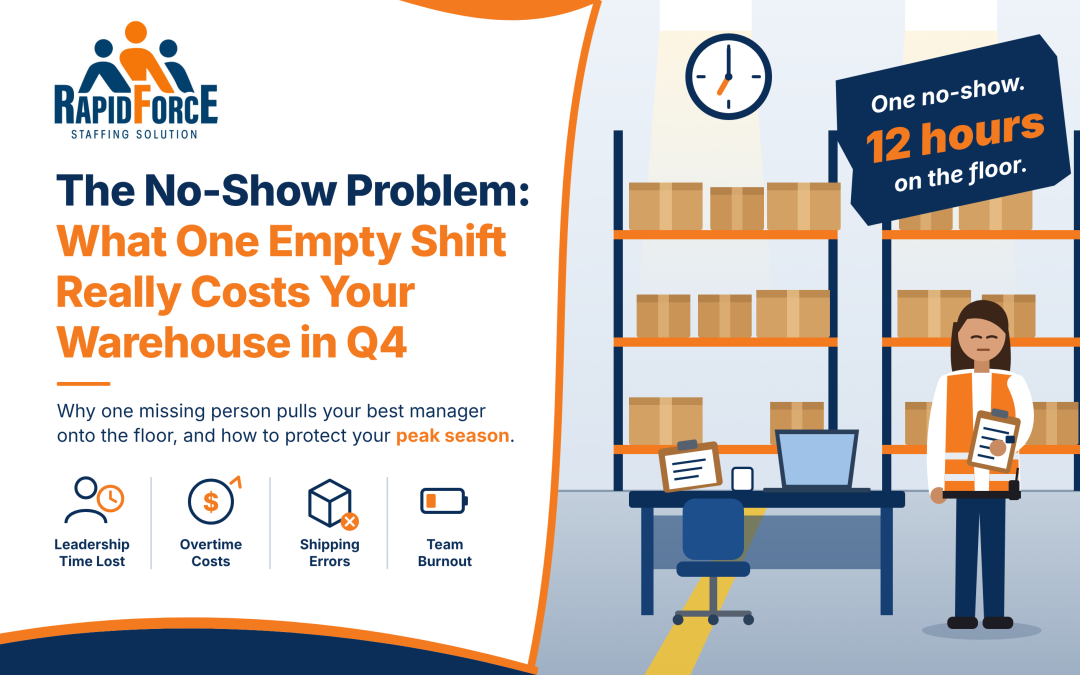
When my warehouse lead didn’t show up, my whole day changed. I got the technicians ready to roll out in the morning, received them back in the afternoon, and staged everything that had to go out the next day. Those days ran from 7 a.m. to 7 p.m.
The operation kept flowing, because that was the priority. But everything a GM is supposed to do had to wait: planning, the numbers, the team, the clients.
The upside I didn’t expect
Those shifts taught me something no report ever did. When you step into your team member’s role, you see the process from the inside, and you see it fast.
You notice the steps that slow everyone down, the handoffs that break, and the tools that don’t work. You also see what the team does well that nobody ever recognized. Problems that never show up in a report become obvious in a few hours.
That’s why I believe every leader should work a shift in their team’s shoes from time to time. By choice, not by emergency. Covering a role on purpose is an audit. Covering it every week because it’s empty is a cost, and in peak season that cost multiplies.
Why this hits harder in Q4
Peak season puts more volume on the same team, and no-shows are getting more common, not less. In a July 2026 survey of 500 US HR and talent acquisition professionals, 59% said candidate no-shows happen more often than two years ago (LHH). The same survey found 39% of organizations had candidates disappear partway through the hiring process.
Volume is climbing at the same time. US e-commerce sales grew 12.2% year over year in Q2 2026, compared with 6.7% for total retail, according to Census Bureau figures cited by Cognitops.
When a key role sits empty during these weeks, the cost goes well beyond one missing person:
- Leadership time. Your operations manager covers the floor instead of running the operation.
- Overtime. The rest of the team absorbs the hours, usually at 1.5x pay.
- Errors. Rushed staging and tired people lead to mispicks, late routes and returns.
- Burnout. Your best people carry the load the longest, and they are the ones most likely to leave after peak.
A 5-minute self-check
You don’t need a consultant to see what an open role is costing you. Answer four questions about last month:
- How many hours did a manager or supervisor spend covering the open role?
- How many overtime hours did the team log because of it?
- How many shipments went out late or wrong during those days?
- Did anyone on the team quit, or tell you they were close to it?
Then put a number on the first two:
Monthly cost ≈ (manager hours × manager hourly cost) + (overtime hours × 1.5 × hourly wage)
That figure leaves out the errors and the turnover. In other words, it is the floor of what the vacancy costs, not the ceiling.
Why urgent hiring backfires
The natural reaction is to fill the seat fast. That is how most operations end up hiring the same position twice.
It usually goes like this: the role opens, pressure builds, and you hire the first person who looks good enough. They start without real screening or a fit check. A few weeks later they stop showing up, or they leave, and you are back at the beginning, now in the middle of peak.
A rushed hire doesn’t close the vacancy. It postpones it, and every round costs you more leadership time than the last.
How to protect your operation before the next no-show
You can’t prevent every absence, but you can stop one absence from taking over your week.
- Cross-train for your critical roles. Know who can run dispatch, staging and returns if the lead is out. If the answer is only you, that’s your first fix.
- Build a bench before you need it. Keep a short list of pre-screened candidates for the roles that hurt the most when they’re empty.
- Hire supervisors before it’s urgent. The best time to recruit a warehouse lead is when you still have one.
- Screen for reliability, not just skills. Attendance history and references from past supervisors tell you more than a polished resume.
- Hire bilingual leads in Miami. A supervisor who can talk to the floor team and to clients in English and Spanish removes a bottleneck most operations don’t see until it breaks.
How RapidForce helps
I built RapidForce so operations leaders can stop covering empty seats and go back to running their business.
We are a Miami based direct hire recruiting agency. We recruit across the US, plus bilingual remote talent in Latin America. We screen and verify every candidate before you meet them, and every placement is backed by a 60-day guarantee.
If you have a role that has been open too long, or one you can’t afford to lose during peak season, let’s talk.
Call 305-563-9808 or email info@rapidforcestaffs.com.
Evelyn Diaz, Managing Director, RapidForce Staffing Solution
Sources
- Candidate ghosting: what employers are actually seeing, LHH, July 2026
- How to Forecast Warehouse Labor for Q4 Peak 2026, Cognitops